

Homemade Tomato Paste (No Salt Added)

If your garden is overflowing with ripe tomatoes, this homemade tomato paste is a great way to preserve their rich flavor. Unlike many store-bought versions, this rustic tomato paste contains no preservatives or added salt, allowing the natural sweetness and acidity of the tomatoes to shine. It’s easy to make with just fresh Roma tomatoes and a few basic kitchen tools.
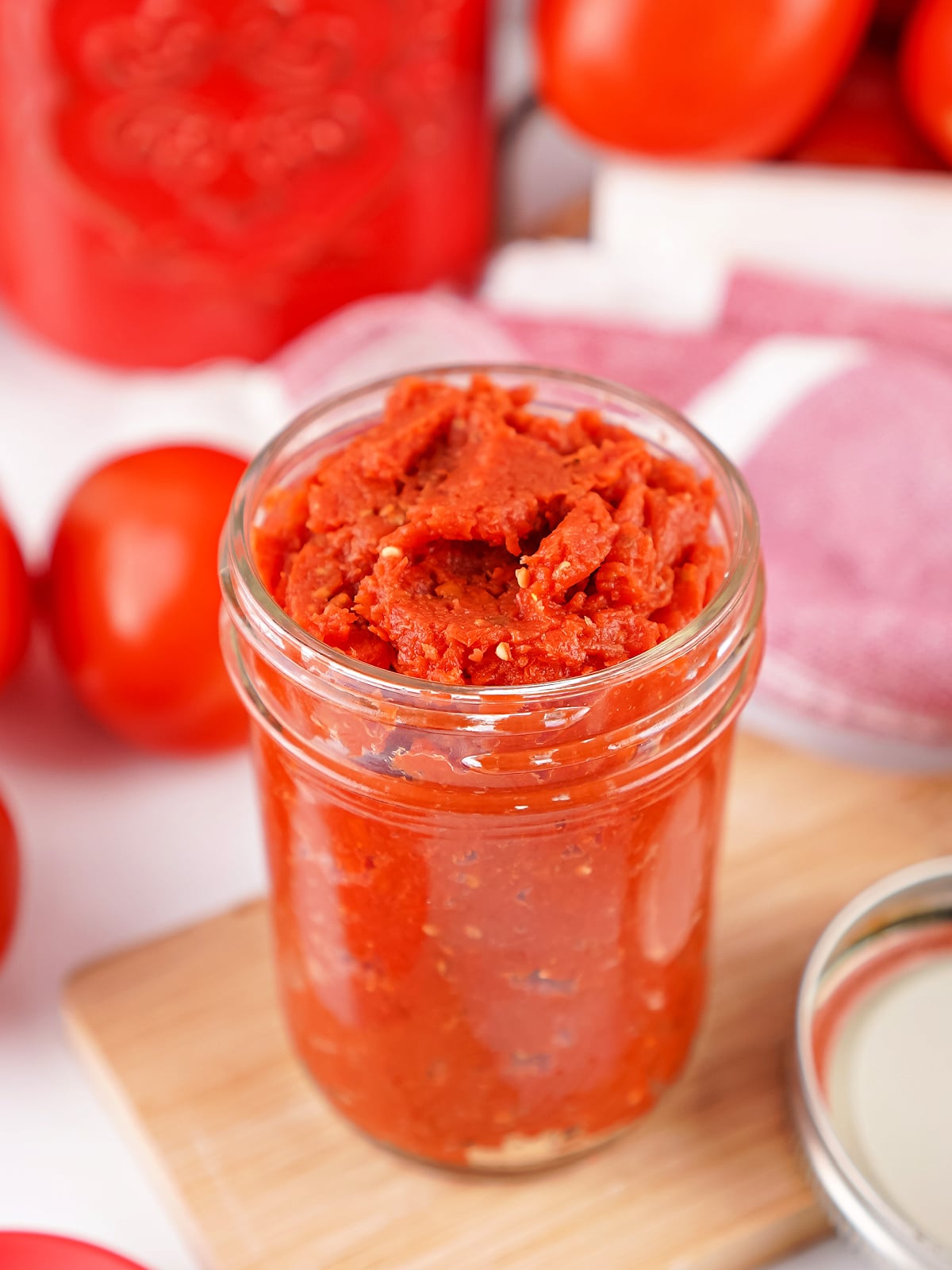
The finished paste is thick, concentrated, and perfect for soups, stews, sauces, chili, pizza, and countless other recipes.
Why You’ll Love This Recipe
- Made with just one ingredient (plus optional olive oil)
- No added salt or preservatives
- A great way to use garden tomatoes
- Rich, concentrated tomato flavor
- Freezer-friendly and canning-friendly
- Easier to make than you might think
Ingredients
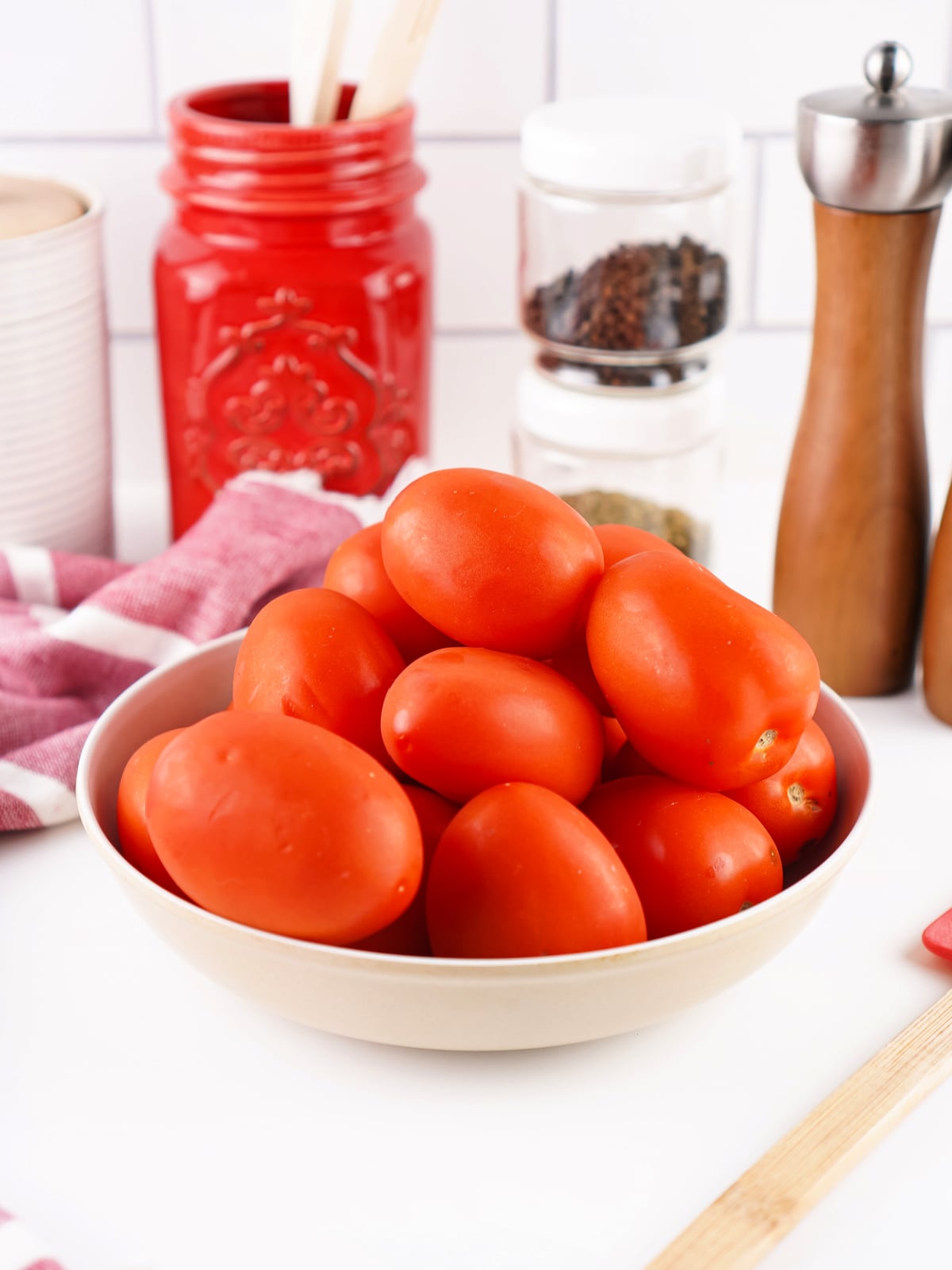
- 4 pounds Roma tomatoes
- 1 to 2 tablespoons olive oil (optional, for storing)
Optional Salt
If you’d like a salted tomato paste, stir in ½ teaspoon kosher salt (or 1/4 teaspoon fine sea salt) after the paste has finished cooking. This seasons the paste without making it overly salty. You can always add more salt later when using it in recipes.
Equipment
- Blender
- Fine-mesh sieve
- Large bowl
- Large saucepan
- Wooden spoon or silicone spatula
Instructions
- Wash the tomatoes thoroughly. Remove the stems and cut away any bruised or damaged spots.
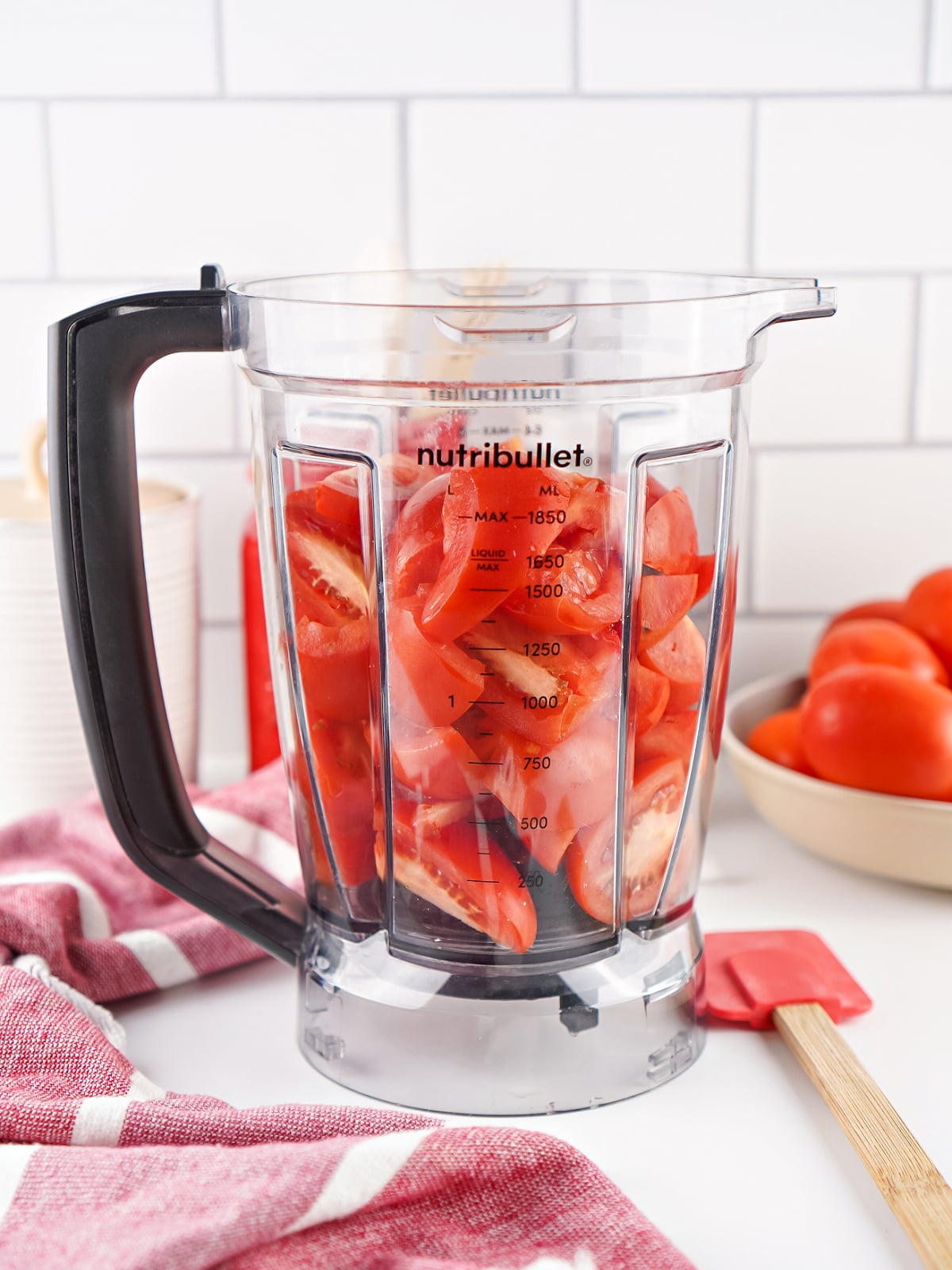
- Quarter the tomatoes. Working in batches if necessary, blend them until smooth, about 12 to 15 seconds.
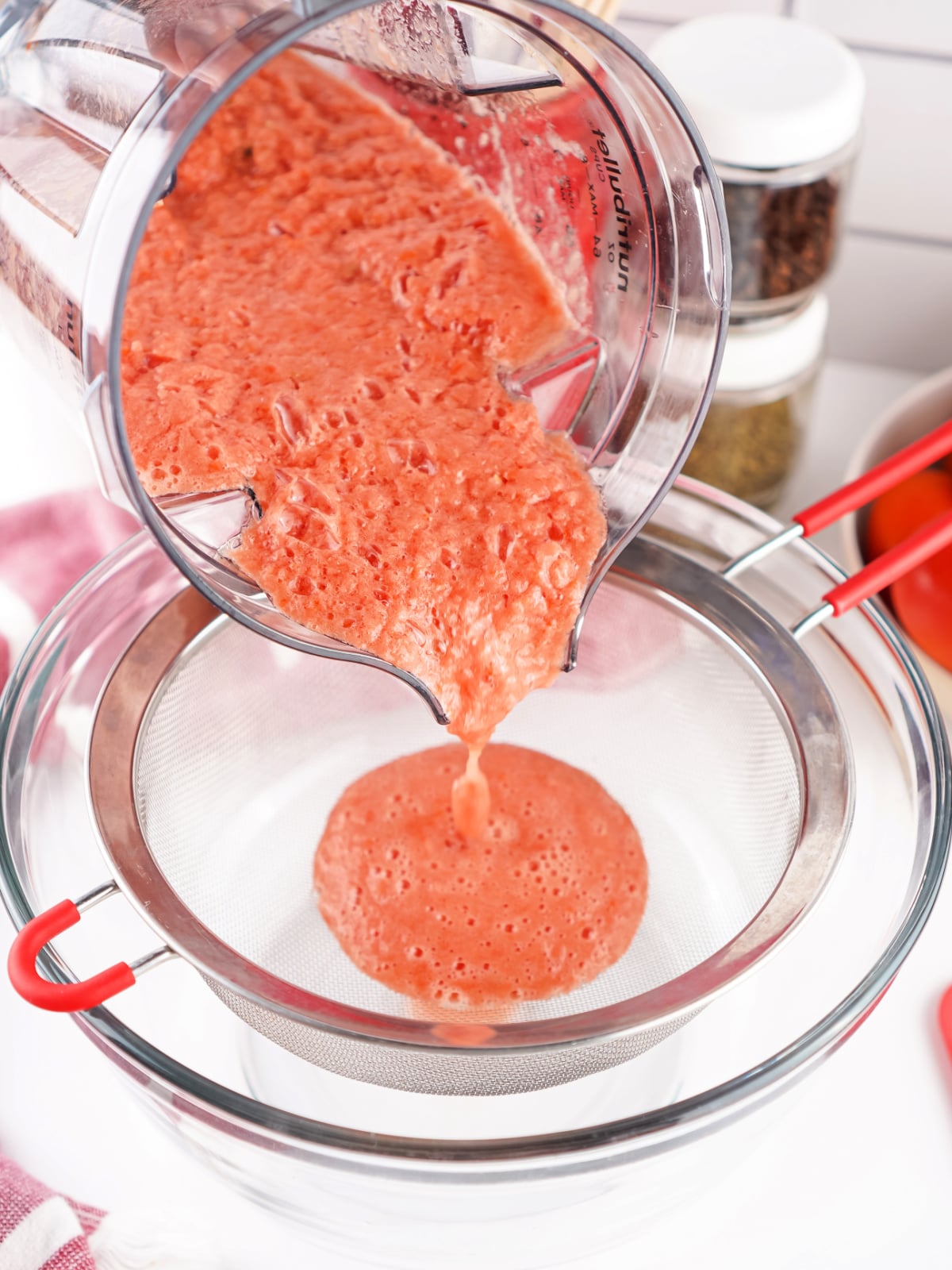
- Place a fine-mesh sieve over a large bowl. Pour a small amount of the tomato puree into the sieve and gently stir with a spoon or spatula to remove as much liquid as possible. Continue with the remaining tomatoes.Tip: Don’t overload the sieve. Working with small batches makes the straining process much faster and more effective.
- Transfer the strained tomato pulp to a large saucepan.
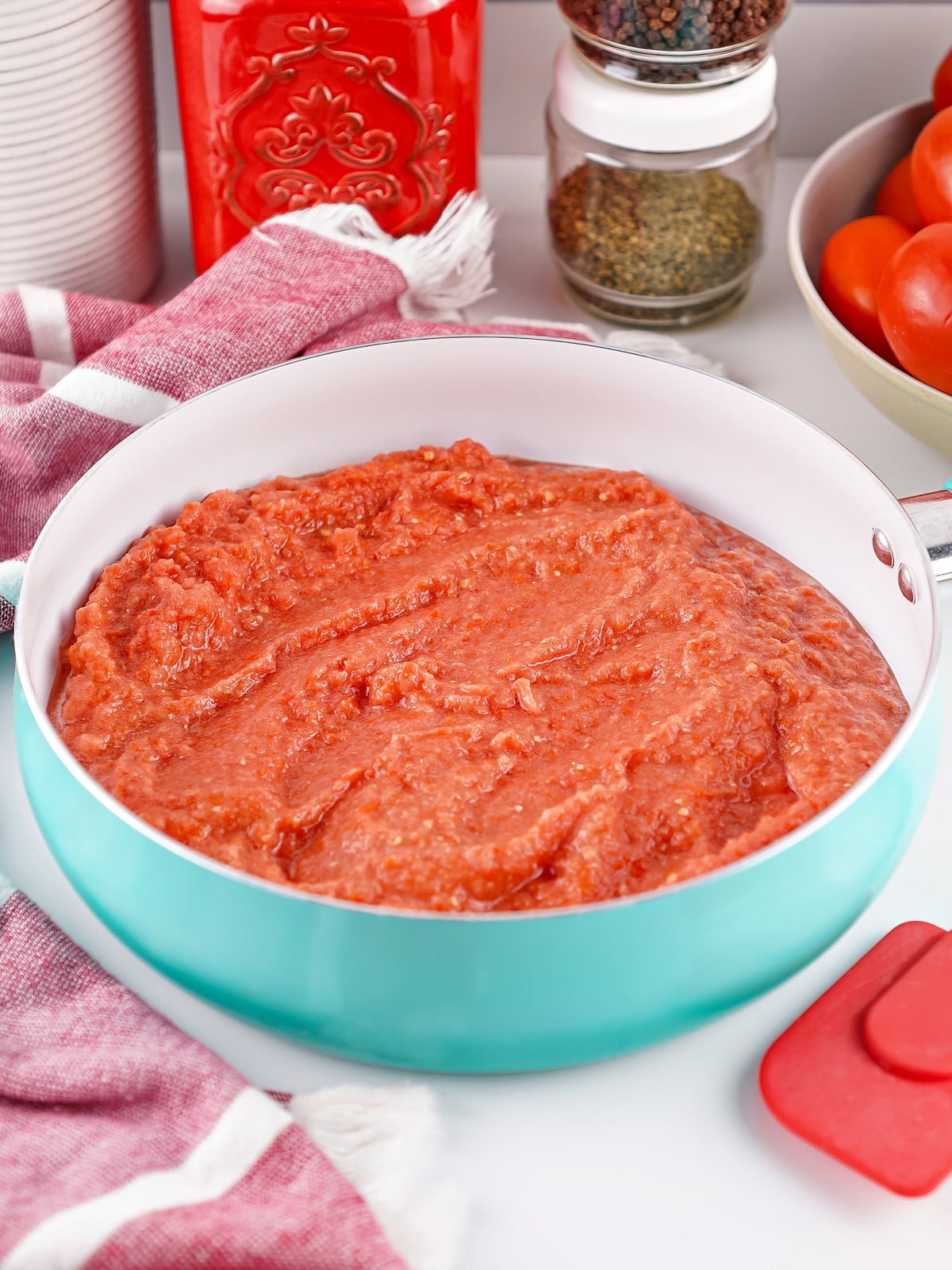
- Cook over low heat, stirring occasionally, for about 1 hour and 50 minutes, or until the mixture has reduced into a thick paste. It should be thick enough to hold its shape on a spoon.
- If desired, stir in salt.
- Let cool completely before transferring to storage containers.
Kitchen Tools That Make Homemade Tomato Paste Easier
This recipe is simple, but having the right equipment can make the process much faster and easier. These are the tools I recommend if you plan to make homemade tomato paste regularly.
- Food Mill – A great option if you prefer to separate the skins and seeds before reducing the tomatoes.
- Fine Mesh Sieve – Helps create a smoother tomato puree while catching any remaining bits of skin or seeds.
- High-Powered Blender – Quickly purees the tomatoes into a smooth mixture before cooking.
- Half-Pint Mason Jars – Just the right size for storing small batches in the refrigerator or freezer.
- Canning Funnel – Makes filling jars neat and much less messy.
Tomato Paste (No Salt Added)
Ingredients
Method
- Wash the tomatoes thoroughly. Remove the stems and cut away any bruised or damaged spots.
- Quarter the tomatoes. Working in batches if necessary, blend them until smooth, about 12 to 15 seconds.
- Place a fine-mesh sieve over a large bowl. Pour a small amount of the tomato puree into the sieve and gently stir with a spoon or spatula to remove as much liquid as possible. Continue with the remaining tomatoes.
- Transfer the strained tomato pulp to a large saucepan.
- Cook over low heat, stirring occasionally, for about 1 hour and 50 minutes, or until the mixture has reduced into a thick paste. It should be thick enough to hold its shape on a spoon.
- If desired, stir in salt.
- Let cool completely before transferring to storage containers.
Nutrition
Notes
If you’d like a salted tomato paste, stir in 1 teaspoon kosher salt (or ¾ teaspoon fine sea salt) after the paste has finished cooking. This seasons the paste without making it overly salty. You can always add more salt later when using it in recipes.
Tried this recipe?
Let us know how it was!Notes and Tips
Choose the Right Tomatoes
Roma tomatoes are ideal because they contain more flesh and less water than slicing tomatoes, which means less cooking time.
You can also use San Marzano, Amish Paste, or other paste tomatoes.
Don’t Use Rotten Tomatoes
It’s fine to trim away small bruises or blemishes, but discard any tomatoes that show signs of mold, rot, or fermentation. Those flavors will carry into the finished paste.
Save the Tomato Juice
The juice collected while straining doesn’t have to go to waste. Use it for:
- soups
- homemade vegetable broth
- Bloody Marys
- cooking rice
- adding to pasta sauce
- watering calcium-loving garden plants (diluted)
Don’t Throw Away the Pulp
Because the tomatoes are blended before straining, very little edible pulp is left behind. The sieve mainly catches the skins, seeds, and a small amount of fibrous bits. If you’d rather not discard them, you can compost them or dry them until crisp and grind them into homemade tomato powder for seasoning your favorite dishes.
Variations
- Garlic Tomato Paste – Cook 2 to 3 minced garlic cloves with the tomatoes during the last 20 minutes.
- Spicy Tomato Paste – Add ½ teaspoon crushed red pepper flakes or a pinch of cayenne pepper.
- Italian Herb Tomato Paste – Stir in dried basil, oregano, or thyme after cooking.
Homemade vs. Store-Bought Tomato Paste
Homemade tomato paste has a fresher, brighter tomato flavor than canned varieties. Because it contains no preservatives or added salt (unless you add it yourself), you have complete control over the flavor.
The texture is slightly more rustic than the ultra-smooth paste sold in cans, but it performs beautifully in recipes.
Storage
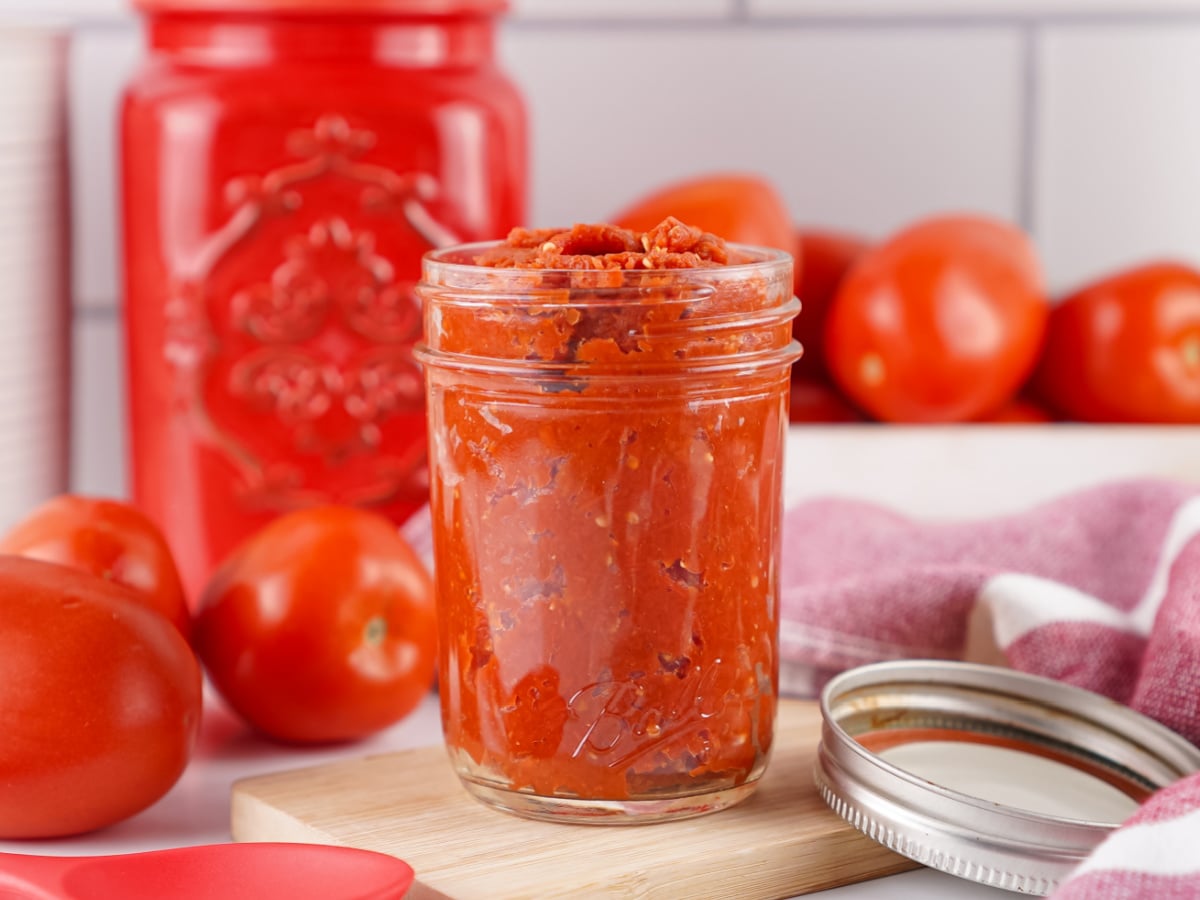
- Refrigerate in an airtight container for up to 1 week.
- Pour a thin layer of olive oil over the surface to help protect it from air exposure.
- Freeze in ice cube trays or tablespoon portions for up to 6 months.
- It may also be canned using a tested pressure-canning recipe designed for tomato products.
Frequently Asked Questions
It will keep in the refrigerator for about one week in an airtight container. For longer storage, freeze it or pressure can it using an approved canning method.
Yes, but they contain more water than Roma tomatoes, so you’ll need to cook the puree longer to reach a thick paste.
Not really. Most of the cooking time is hands-off while the tomatoes slowly reduce. The only active work is blending, straining, and stirring occasionally.
Removing excess liquid before cooking dramatically shortens the simmering time and creates a thicker, richer tomato paste much more quickly.
Serving Ideas
Use homemade tomato paste to:
- Add richness to pasta sauces
- Make homemade pizza sauce
- Flavor soups and stews
- Stir into chili
- Mix into meatloaf
- Add depth to braised meats
- Make homemade barbecue sauce
- Enhance casseroles and slow cooker meals
Last Bite
Now that you’ve got a jar of homemade tomato paste in the refrigerator or freezer, it’s time to put it to good use! Stir a spoonful into The Best Cheesy Lasagna for even richer flavor, use it to make a pizza sauce to spread it on Homemade Pizza, or add it to Tomato Curry Sauce for extra depth and richness. Homemade tomato paste is one of those ingredients that can make everyday recipes taste even better.
If you make this recipe, I’d love to hear how it turned out! Did you leave it unsalted, or did you add your own seasonings? Leave a comment below and let me know how you used your homemade tomato paste. Happy cooking!

This is a good way to use extra tomatoes.