

Homemade Vegetable Stock

There’s nothing quite like the aroma of a pot of simmering vegetable stock filling your kitchen. It’s warm, cozy, and makes you feel like something delicious is about to happen. The best part? Vegetable stock is one of the easiest recipes you can make at home. With just a handful of vegetables, herbs, spices, and water, you can create a rich and flavorful stock that’s perfect for soups, stews, sauces, and more.

Forget those store-bought cartons – this homemade version is fresher, more affordable, and you know exactly what’s in it. Additionally, it’s a great way to utilize whole vegetables and minimize food waste while creating a stock that’s rich in layers of flavor.
Why Make Your Own Vegetable Stock?
- Better flavor: Homemade stock is more robust than store-bought. The slow simmer draws out every bit of goodness from the vegetables and herbs.
- No waste: You’re using whole veggies, roots, skins, and all – nothing goes to waste.
- Customizable: Keep it unsalted if you’d like to control the sodium later, or season it upfront if you already know how you’ll use it.
- Budget-friendly: A big batch yields three large mason jars of stock, all from simple pantry and produce staples.

Ingredients You’ll Need
- 1 gallon water
- 1 head celery
- 2 medium yellow onions
- 5 medium carrots
- 1 head garlic
- 12 sprigs thyme
- 4 sprigs rosemary
- 3 sprigs sage
- 5 bay leaves
- 2 tablespoons whole peppercorns
- 1 teaspoon salt (optional)
Items Needed
- Large stock pot
- 3 32-ounce mason jars with lids
- Mesh strainer
Directions
- Wash all vegetables.
- Cut 1 whole celery head into 3-inch pieces, from the roots to the leaves, and add them to the stock pot.
- Quarter carrots and onions. Leave all the roots and skin on the carrots, and remove the onion roots. Add to the stock pot.
- Slice the head of garlic in half, widthwise, so all of the cloves are sliced in half. Add both sides of the garlic to the stock pot—no need to peel.
- Add all the herbs and spices, whole, to the stockpot.
- Add 1 gallon of water to the pot.
- Bring the stockpot to a boil, then simmer on low to medium-low heat for 1 hour.
- Remove the large pieces of vegetables before straining the rest of the stock through a mesh strainer.
- Carefully fill mason jars with the stock and put the lid on while the liquid is still hot.
- Let the stock rest for about 2 hours, or until room temperature, on the counter. Retighten the lids and place them in the fridge.
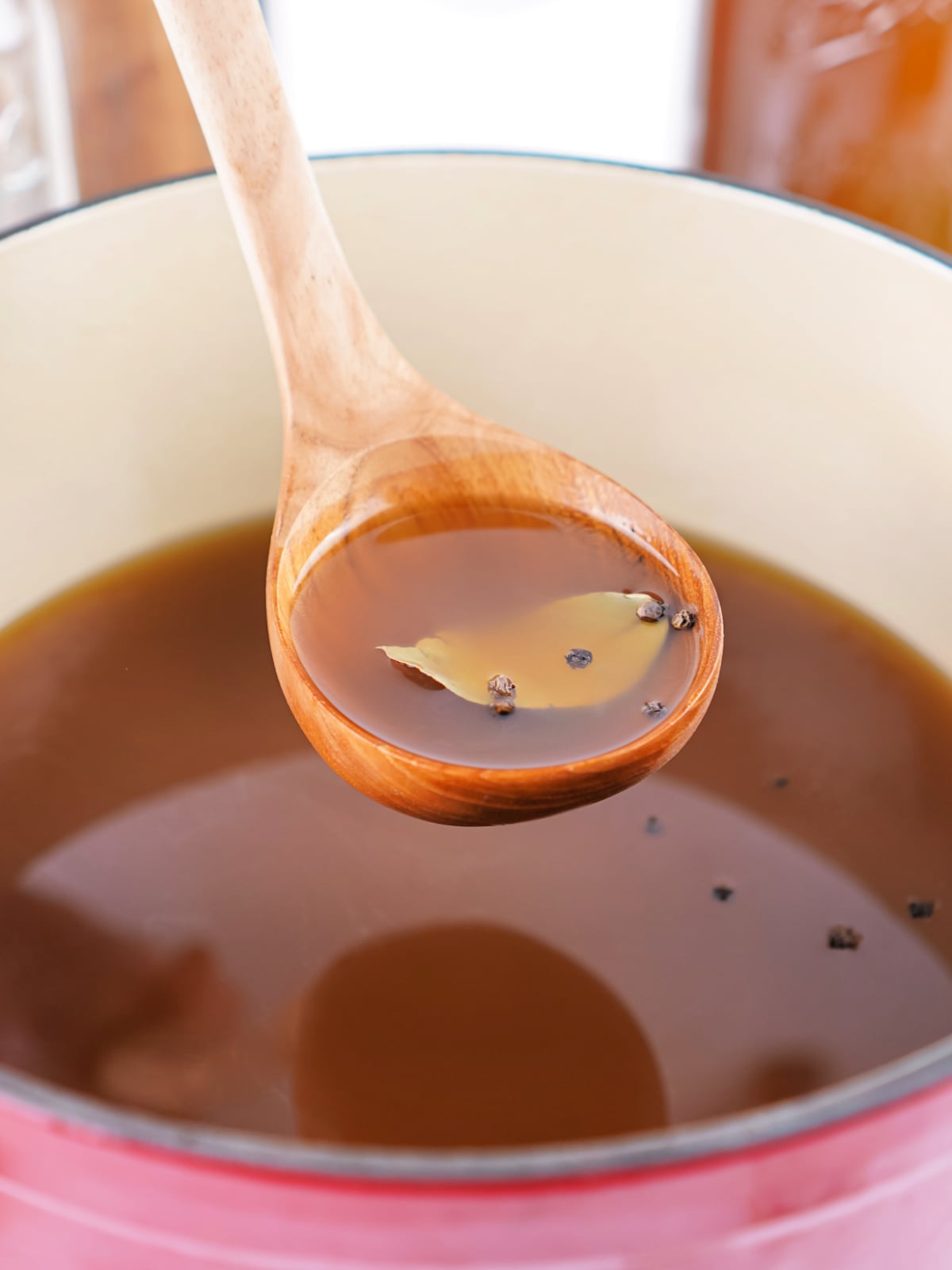
If you love cozy soups as much as I do, you’ll definitely want to put this homemade stock to work. Try it in my Instant Pot Chicken Tortilla Soup, hearty UnStuffed Pepper Soup, or creamy Tuscan Chicken Soup. Each one gets a serious flavor boost when you start with a fresh, homemade base.
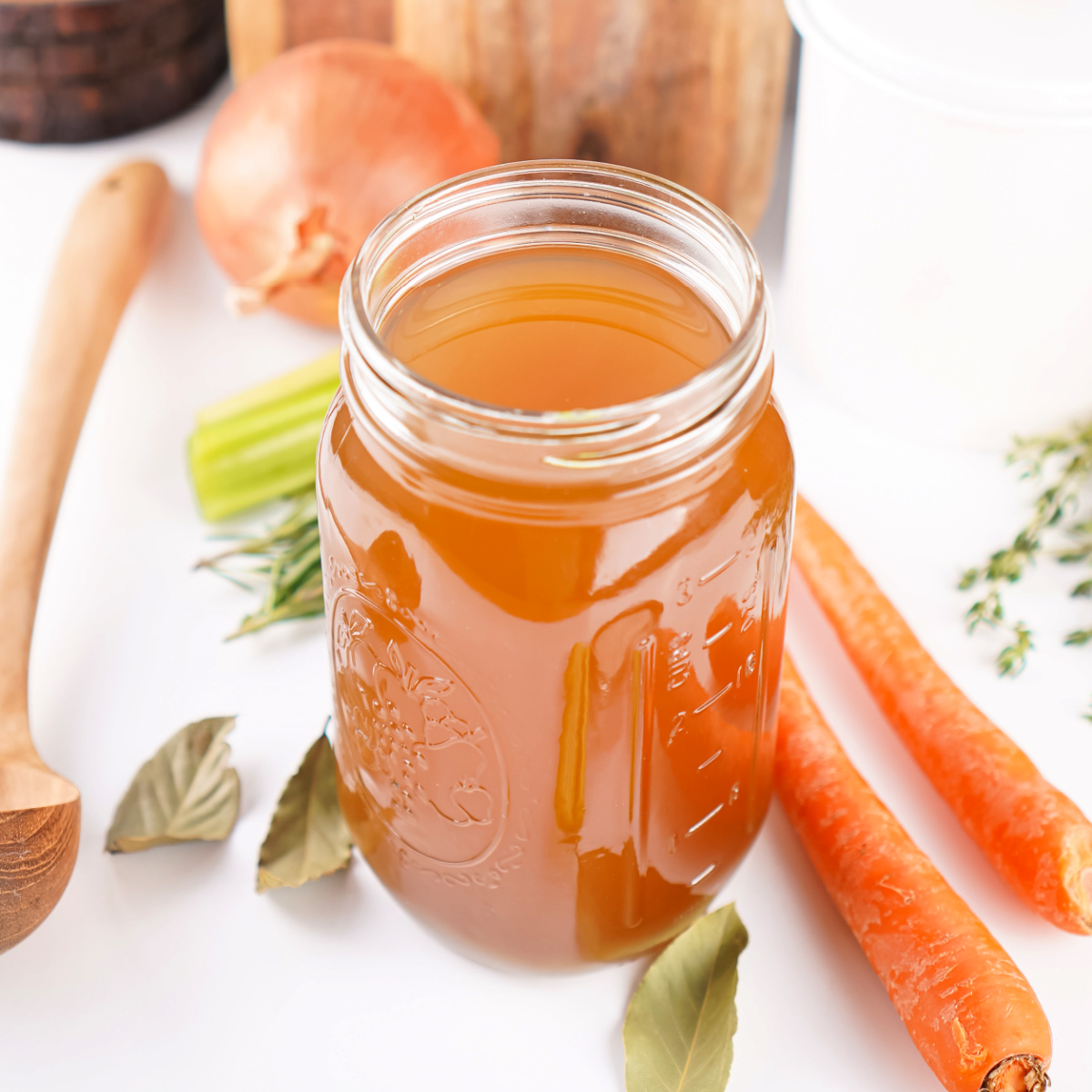
Vegetable Stock
Ingredients
Equipment
Method
- Wash all vegetables.
- Cut 1 whole celery head into 3-inch pieces from the roots to the leaves and add to the stock pot.
- Quarter carrots and onions. Leave all roots and skin on carrots, and remove onion roots. Add to the stock pot.
- Slice the head of garlic in half, widthwise, so all of the cloves are sliced in half. Add both sides of the garlic to the stock pot—no need to peel.
- Add all of the herbs and spices, whole, to the stock pot.
- Add 1 gallon of water to the pot.
- Bring stock pot to a boil and then simmer on low/medium-low for 1 hour.
- Remove the large pieces of vegetables before straining the rest of the stock through a mesh strainer.
- Carefully fill mason jars with the stock and put the lid on while the liquid is still hot.
- Let the stock rest for about 2 hours, or until room temperature, on the counter. Retighten the lids and place them in the fridge.
Nutrition
Video

Notes
Tried this recipe?
Let us know how it was!Tips for Success
- Storage: Keep in the fridge for up to 1 week.
- Freezer-friendly: Store in airtight containers in the freezer for up to 3 months.
- Canning option: For a longer shelf life, you can pressure can the jars and store them in the pantry.
- Whole veggies matter: Using the entire vegetable—from the root to the skin—gives your stock deeper flavor and more nutrients.
- Salt or no salt? Adding salt upfront is handy if you know how you’ll use the stock, but keeping it unsalted ensures you won’t accidentally over-season future recipes.
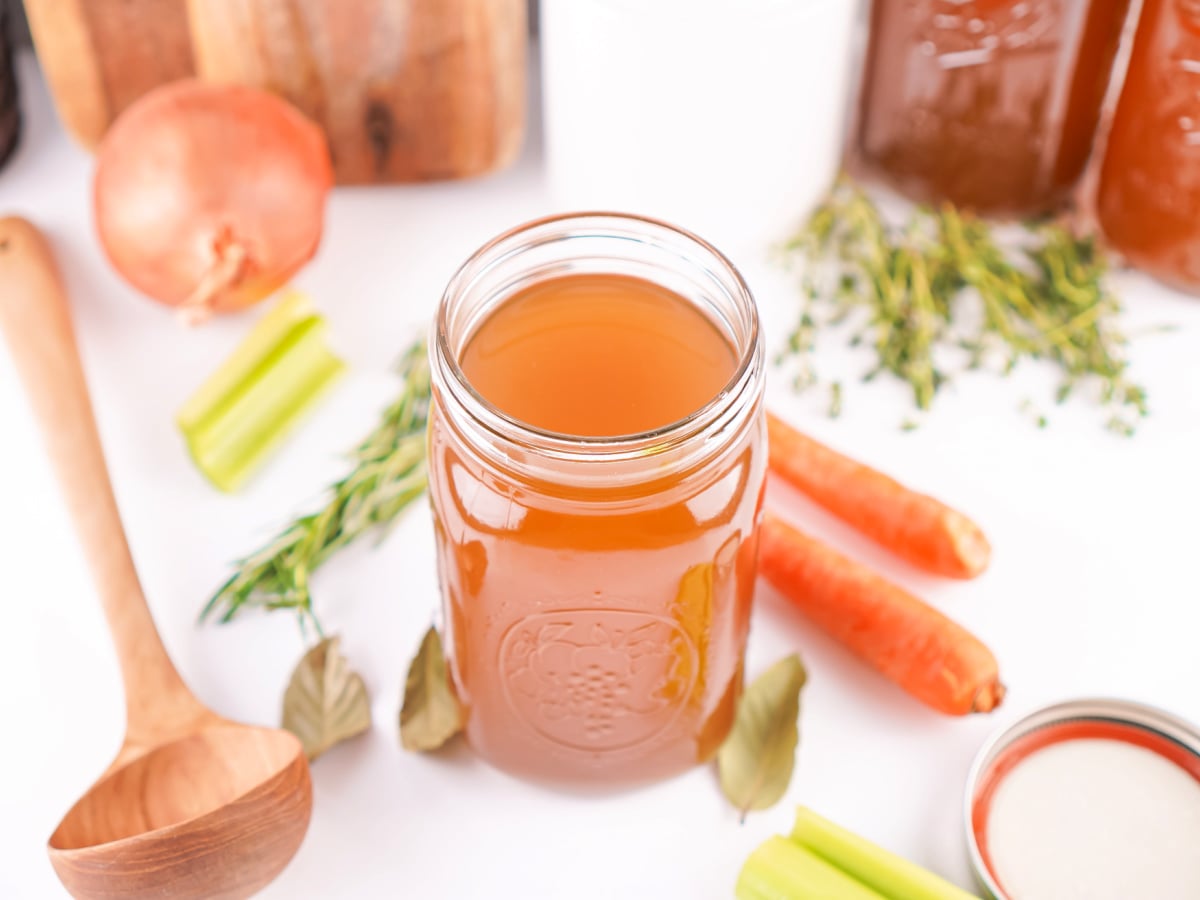
How to Use Homemade Vegetable Stock
Vegetable stock is the ultimate kitchen staple. Use it anywhere you’d normally use broth or water for added depth of flavor:
- Soups and stews
- Risottos and pasta dishes
- Gravy and pan sauces
- Cooking grains like rice, quinoa, or farro
- As a base for vegetarian or vegan recipes
Final Bite
Once you try making your own vegetable stock, you may never go back to the store-bought version. It’s simple, flavorful, and gives you plenty to work with for future meals. Whether you’re whipping up a cozy soup on a cold day or just want a nutrient-rich base for cooking grains, this homemade stock is a game-changer.
